Salam! Welcome to my first entry.
There are places you visit and places that visit you. Song-Kul Lake, Kyrgyzstan, is the second kind.
I went to Kyrgyzstan with no fixed expectations. Just a country I had always been curious about and a few weeks to move through it. Song-Kul turned out to be one of the highlights, which is saying something because Kyrgyzstan kept delivering at every stop.
Getting to Song-Kul Lake: The Road Is Part of It
Nobody arrives at Song-Kul easily, and that is part of the point.
The lake sits at 3,016 metres above sea level in the Tian Shan mountains, accessible only between June and September. Outside those months the roads are snowed in and completely impassable. Getting there means hours of winding roads, unpaved sections, mountain passes and landscapes that keep changing outside the window. The scenery shifts from valley floors to alpine meadows to something that honestly looks like the edge of the world.
Personally, I came through Kazakhstan, crossed the border into Kyrgyzstan and made my way here as part of a wider itinerary. If you are flying in directly, arrive into Bishkek at Manas International Airport (FRU). From there, hire a driver, join a shared tour or arrange transport through a local agency. The drive from Bishkek takes roughly six to eight hours depending on your route and stops, and a 4WD vehicle helps significantly on the unpaved sections.
One practical note before you leave: get your cash out in Bishkek or in Kochkor, the last town before the lake. There are no ATMs at Song-Kul and most camps operate on cash only.
The Lake Itself
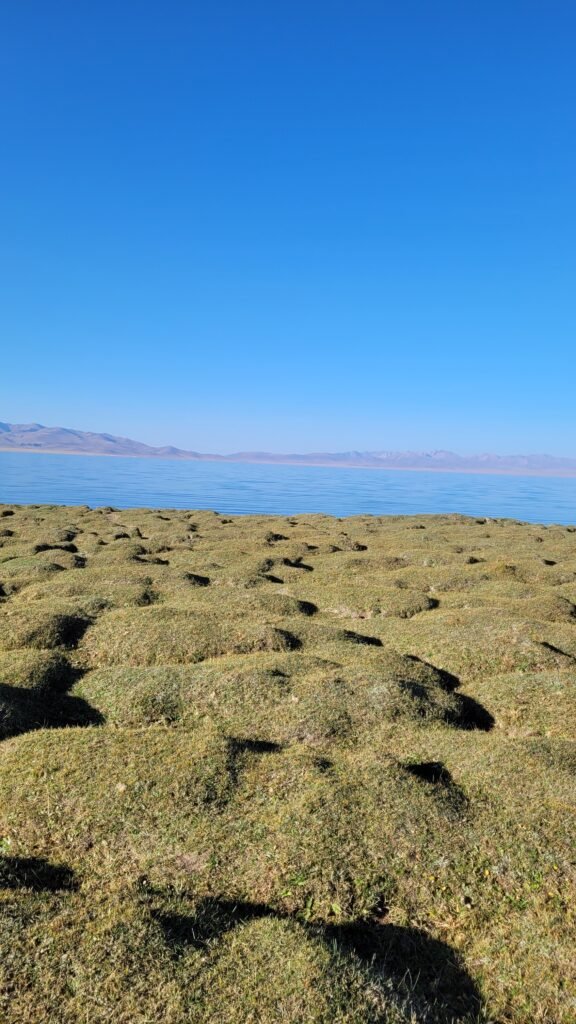
Standing there in the middle of a landlocked country, surrounded by steppe and mountains, and there is this enormous body of water just sitting quietly. Completely still. Completely clear. The lake stretches 29 kilometres long and at certain angles it looks genuinely endless. No buildings on the shore, no roads, no wifi. Just water, grass, yurts and horses scattered across the landscape like a painting that has not changed in a thousand years.
Historically, Song-Kul has been a sacred gathering place for Kyrgyz nomadic tribes for centuries. Importantly, the families who bring their livestock here every summer are not performing a tradition for tourists. This is simply how they actually live. That context matters when you are standing there trying to take it all in.
Staying in a Yurt
I had always wanted to stay in a yurt. I saw it on NatGeo when I was young and it stayed with me.
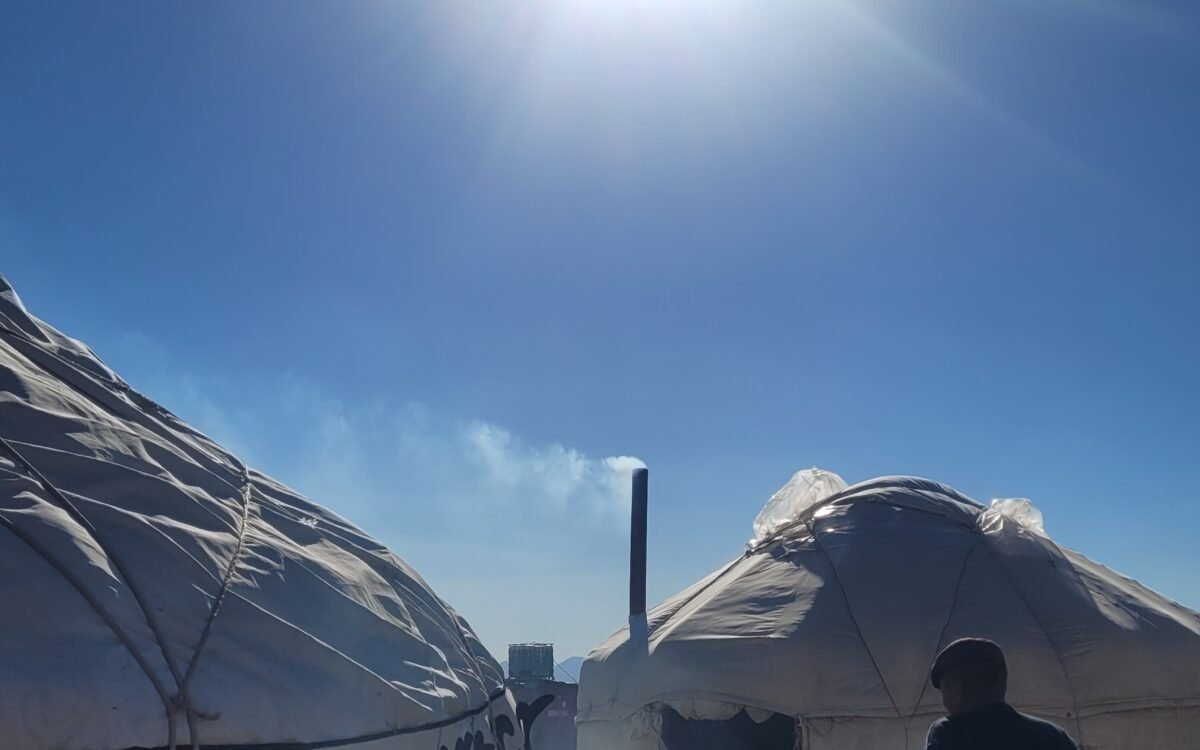
A yurt is a circular structure built from a wooden frame covered in felt, which is compressed wool. The design is thousands of years old and it works remarkably well. Outside was genuinely cold, the kind of cold that surprises you even in summer at this altitude. Inside, however, was warm. There is a coal stove in the centre and each evening a man came to load it with coal. Simple, effective, and somehow deeply satisfying to watch.
The camp was basic but clean. Expect a thin mattress, blankets and not much else beyond that. Since nights at Song-Kul drop to near zero even in July and August, bring a sleeping bag if you can.
Now, about the toilet. I was fully prepared for the worst, a hole in the ground, a questionable smell, the full experience. Instead, what I found at my camp was a seated toilet bowl. A real one. I stood there genuinely surprised. Do not count on this at every camp, but equally do not assume the worst before you arrive.
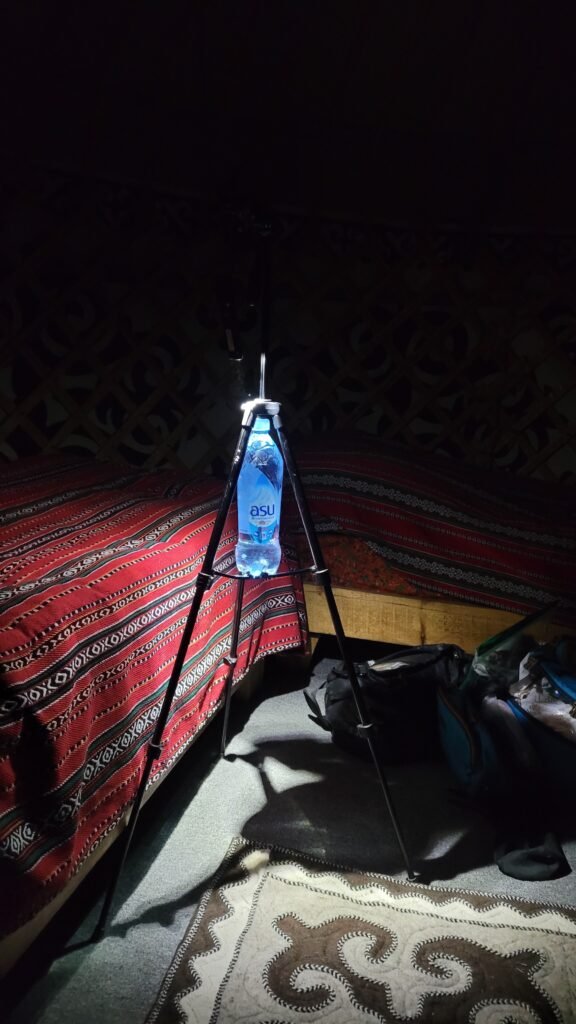
There was no electricity at the camp. Although there was a generator, it stopped working after a while. Instead, we made a makeshift lamp from a torch and a water bottle, which gave off a surprisingly decent glow. We sat in the near dark and talked. Honestly, it was one of the better evenings of the entire trip.
The Night Sky
Song-Kul is one of the darkest places I have ever been. There is no light pollution, no haze and nothing between you and the sky.
The Milky Way was visible. If you have a camera and any interest in astrophotography, the south shore of the lake is said to give the best angle for a clear reflection on the water. Just come prepared with layers, because standing still in that cold for any length of time is a commitment.
Horse Riding with Kara
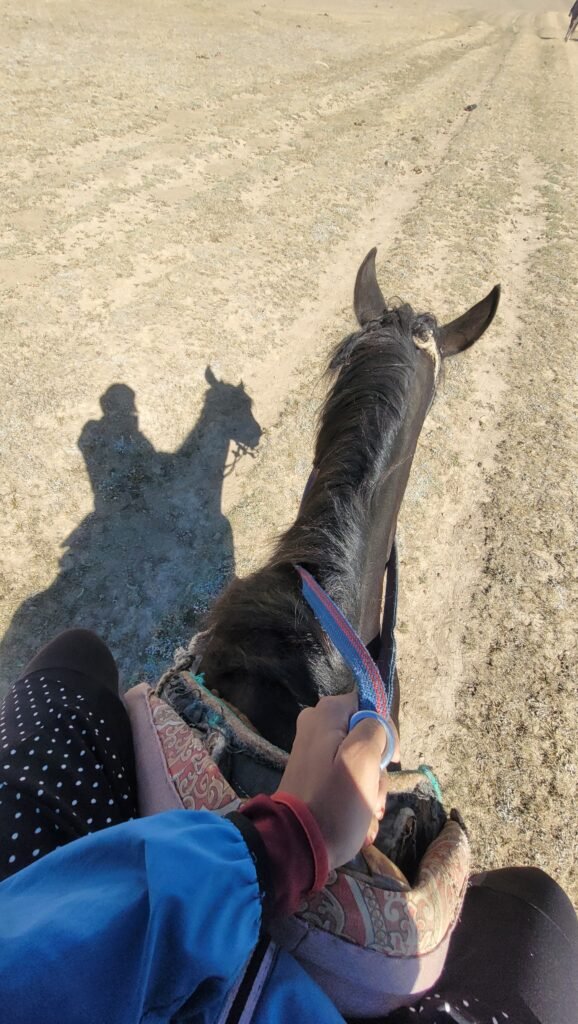
The next morning I went horse riding. Five hours through the steppe with no particular destination, just moving through it.
My horse was named Kara. She was dark coloured, steady and entirely unbothered by me being on her back. Together we rode across open grassland with the lake to one side and mountains in every other direction. No path. Just the sound of hooves on grass and the wind.
Five hours on a horse is a long time if you are not used to it. My legs reminded me of that the next day. Still worth every minute.
Horse riding at Song-Kul is usually arranged through your yurt camp. Confirm the price before you leave and bring cash. Some camps include a one-hour ride, while longer rides are available for an additional fee.
Halal Travel to Song-Kul: Practical Guide
Is Kyrgyzstan Halal-Friendly?
Yes, almost entirely. Since Kyrgyzstan is a majority Muslim country, most meat is halal by default. Alcohol exists but you will not be pressured into anything. Overall, eating here as a Muslim traveller is genuinely easy, especially compared to many other Central Asian destinations.
What to Eat
r
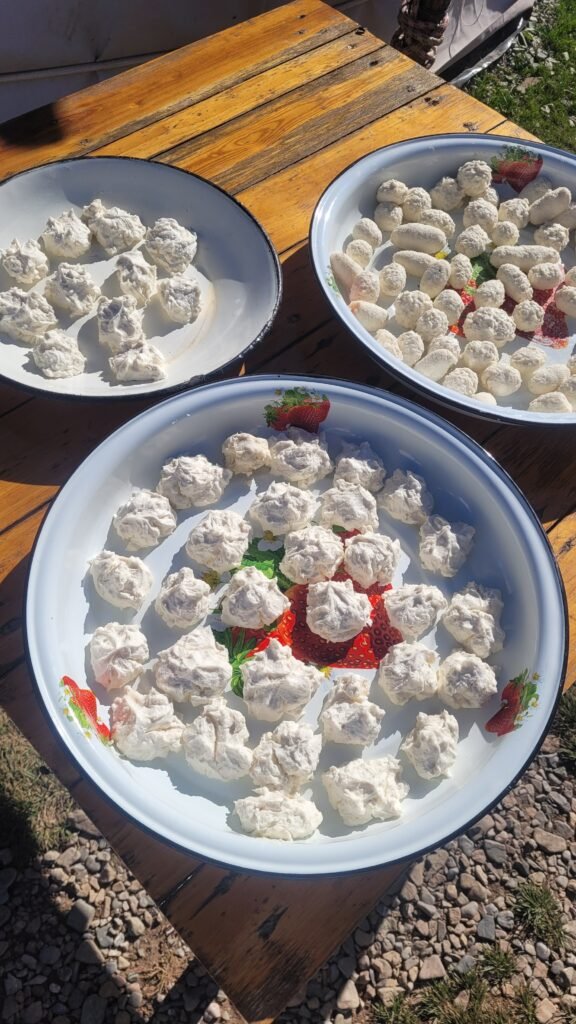
Simply eat whatever your host puts in front of you. That is the honest answer and the right one.
The food at Song-Kul is simple, hearty and halal. Most camps include breakfast, lunch and dinner in the price, so expect soups, bread, meat dishes and endless tea. If you get the chance, try kumis, which is fermented mare’s milk. It is genuinely an acquired taste, but it is part of the experience and your hosts will appreciate you trying.
Other Kyrgyz dishes worth knowing before you arrive: lagman is a warming noodle soup, beshbarmak is boiled meat served over flat noodles and is the national dish, samsa is a baked pastry filled with meat that you will find everywhere, and kurt is dried salty yogurt that looks harmless and tastes intensely of itself. Try it at least once.
How to Get There
Fly into Bishkek at Manas International Airport (FRU). From there, hire a private driver or join a shared tour. The drive takes six to eight hours and a 4WD vehicle is strongly recommended for the unpaved mountain roads. If you are building a wider Kyrgyzstan itinerary, Song-Kul works well as a stop between Bishkek and Naryn or Osh.
Where to Stay
Stay in yurt camps run by local families. Since most camps do not have websites or online booking, the easiest approach is to book through a local tour agency in Bishkek. Prices start from around USD 25 per night including meals. Book ahead in peak July and August, although I also met travellers who simply turned up without a reservation and still found a spot.
What to Bring
Bring warm layers and a sleeping bag if possible, since the cold at night catches most people off guard. Also pack cash in Kyrgyzstani som withdrawn before you leave Bishkek or Kochkor, a portable power bank since electricity is unreliable, and a headtorch. If you want to photograph the Milky Way, bring a camera that handles low light well.
Best Time to Go
Go between June and September. Outside those months Song-Kul is snowbound and inaccessible. July and August are peak season with the most yurt camps open and the warmest daytime temperatures, though nights remain cold throughout. June and September are quieter, and the landscape is still stunning either way.
Would I Go Back?
Already thinking about it.
Song-Kul is the kind of place that quietly recalibrates something in you. The silence, the scale, the simplicity of an evening with no phone signal, a coal stove and the Milky Way outside. I came away from it grateful in a way that is difficult to put into words, which is usually the sign that a place has done its job properly.
Kyrgyzstan deserves more than one trip. Song-Kul deserves more than one night. Go when you can.