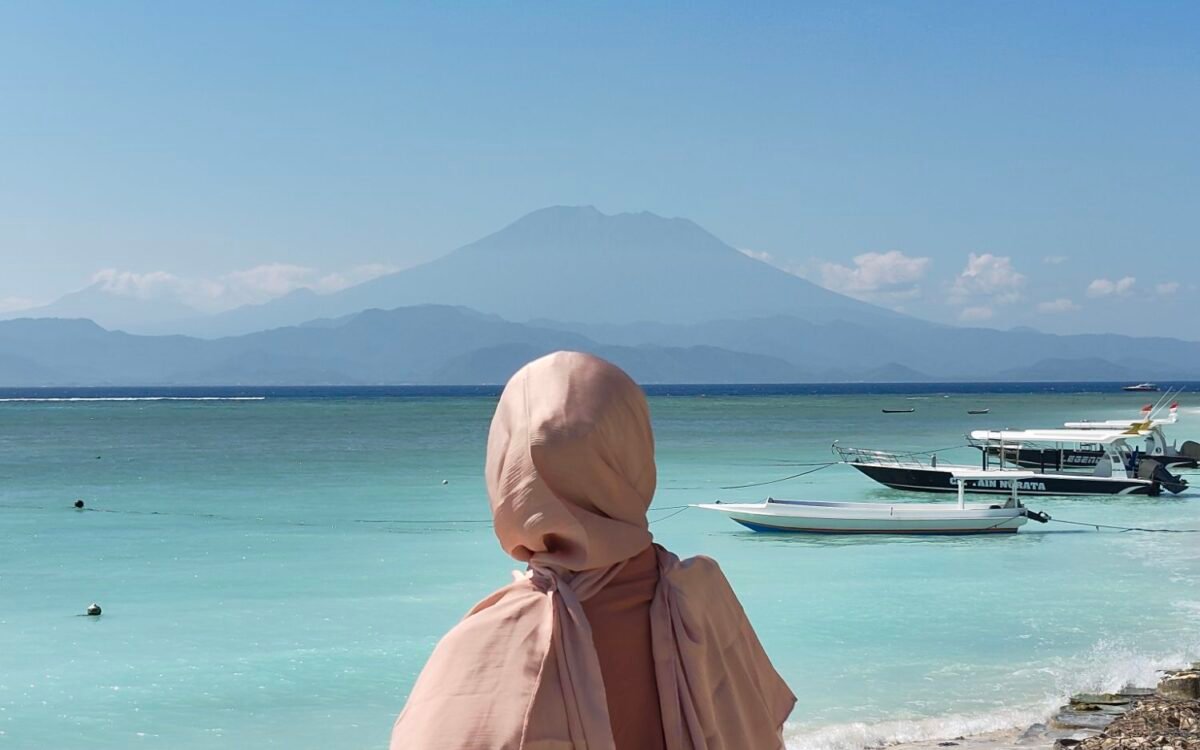
Salam, future me and fellow travellers.
I went to Nusa Lembongan to do fun dives.
The night before the first dive, I decided to do my Advanced Open Water instead. Studied the theory that same night. Went to bed late. Got on the boat the next morning.
That is the kind of decision that either goes very well or very badly. Fortunately, what happened underwater made the whole thing worth it.
Blue Corner Dive
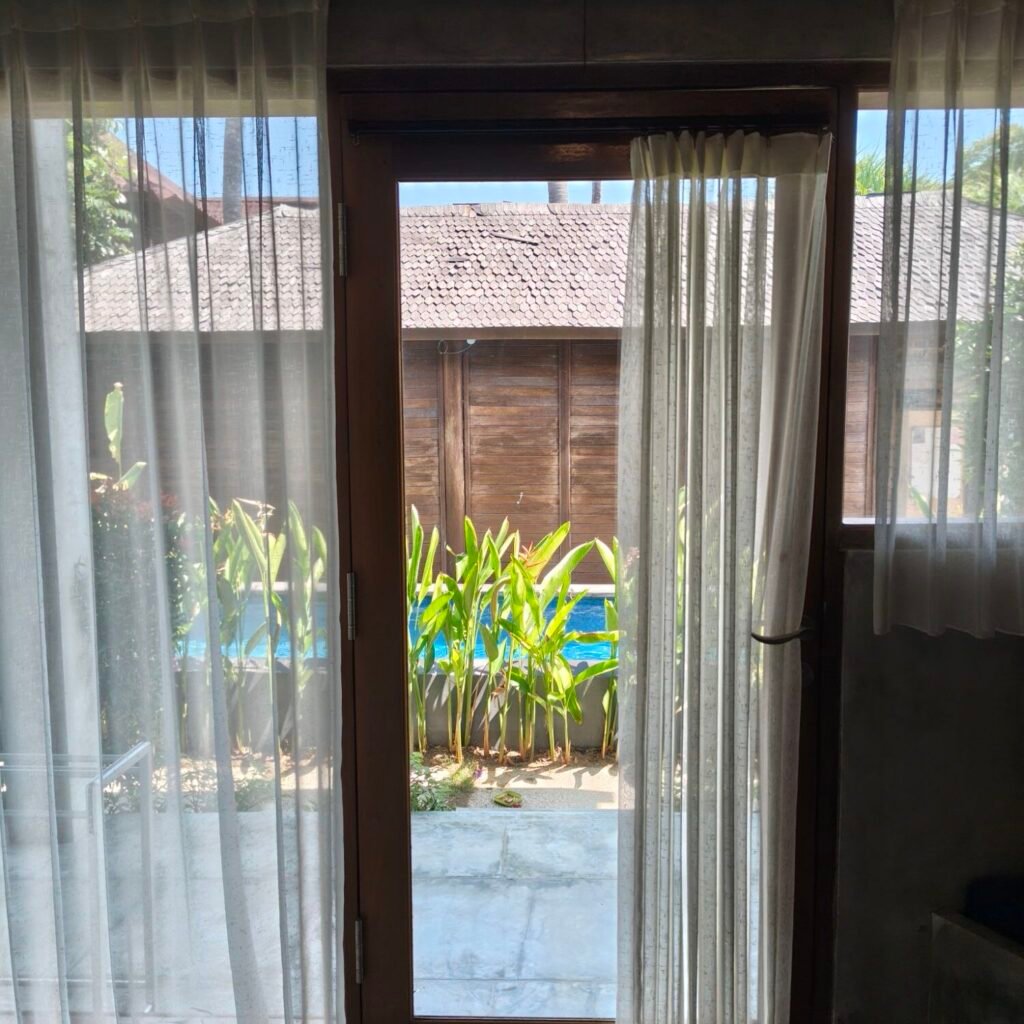
I dived with Blue Corner Dive in Nusa Lembongan. They do PADI courses, fun dives and conservation work across Nusa Lembongan, Nusa Penida and Sanur. Accommodation is on site. Basic and clean. You wake up, walk a few steps, get on the boat. It is really convenient!
Nearly every dive here is a drift dive. The currents around Nusa Lembongan and Nusa Penida are strong. You go in, let the current carry you, and try to keep your jaw closed at what comes past.
You will have 5% discount if you paid everything in cash (This might change).
Day 1: The Mola Mola, Manta Point and the Vomit
The first dive that day was Manta Point. We dropped in and within minutes there were mantas everywhere. Not one or two. Many. Moving slowly and deliberately, wings spreading wide, coming near enough that you had to resist reaching out. You do not touch marine life. That is the rule. But being that close to something that size, in that silence, stays with you.
After surfacing I got back on the boat, sat down and threw up over the side.
Motion sickness. The swell was significant and I had not taken anything beforehand. I felt better almost immediately. Drank some water. Went on the second dive anyway.
Days 2 and 3 I took pills before boarding. Problem solved. Do not wait to see how you feel.
The 2nd dive was at Crystal Bay.
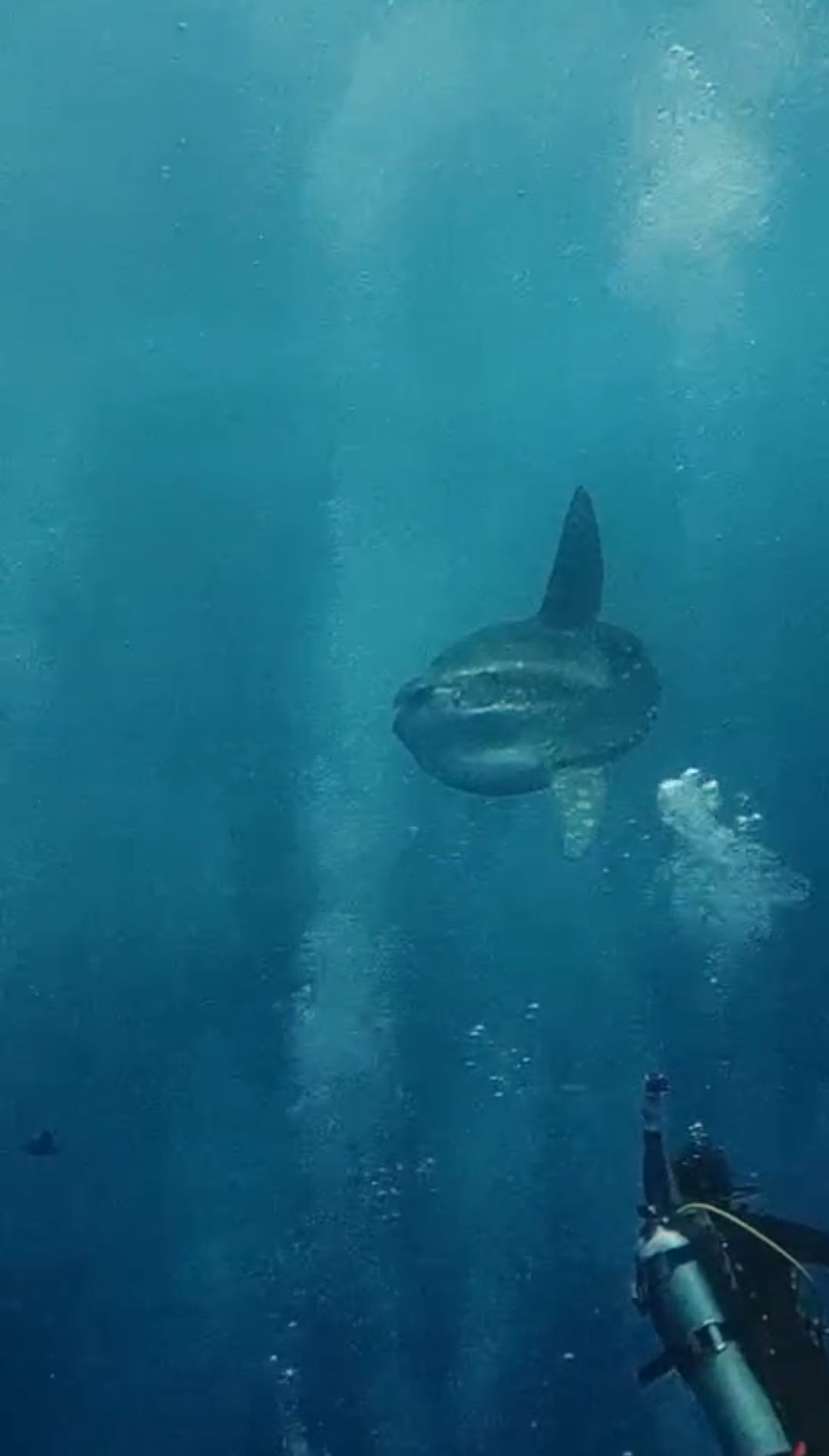
I saw Mola Mola. Nothing prepares you for the size. Just massive. Completely unbothered by you.
The Mola Mola is the heaviest bony fish on earth. Mola alexandrini, the species found in these waters, can weigh over 2,000 kg and stretch up to 3 metres across. It looks like someone drew a fish and forgot to add the back half. Enormous flat body, tiny fins, moving through the water like it has nowhere particular to be. It is extremley rare to spot.
Day 2: Coral Walls, Drift Diving and Turtles Everywhere
My first ever drift dives were on Day 2. Karang Sari for the Deep dive, then Sampalan.
The first drift dive is a strange experience. You go in, the current takes you, and your instinct is to fight it. Then you realise you cannot and you stop trying. You start moving with it instead. At that point it becomes something else entirely. The coral wall moves past you like you are flying. You are not swimming. You are being carried through it.
Karang Sari sits on the eastern side of Nusa Penida. Fewer boats. The reef is dense and healthy. At that depth the light changes and the colours shift. Everything is slower and more deliberate.
Turtles were everywhere on Day 2. Not one or two spotted in the distance. Many, close up, moving past at their own unhurried pace, completely comfortable around divers.
Day 3: Going Deeper, More Drift and a Very Good Eel
Day 3 – Sental and then SD Nusa Penida.
Sental is a north coast drift dive. By this point I was reading the current better and trusting the process. The reef here carries you at a pace that feels like flying. More turtles. The drift diving had become something I actively looked forward to rather than something I was managing.
The last dive was the one that surprised me most. We saw a white with black patterns moray eel tucked into the reef, just its head visible, watching us pass. And a nudibranch, a sea slug. These are the things you only see when you are close to the reef and paying attention. After the big encounters of Day 1, Day 3 reminded me that the small things are worth looking for too.
The Dive Sites Guide
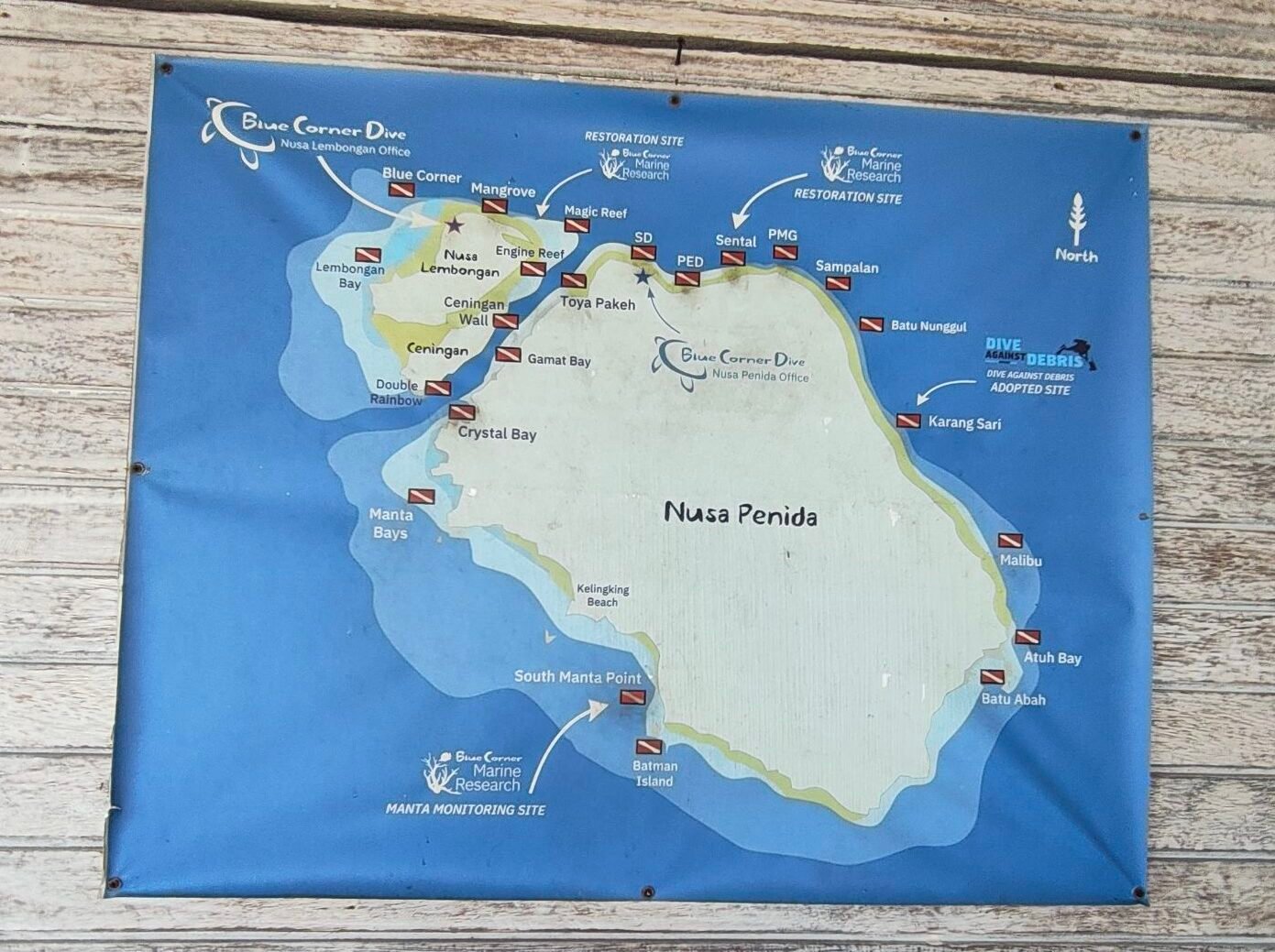
The diving here covers Nusa Lembongan, Nusa Ceningan and Nusa Penida. Your dive operator will take you to different sites across all three islands depending on conditions, season and your certification level. Here is what to know about each main site.
Manta Point, Nusa Penida
Exactly what it sounds like. Manta rays gather here almost year-round at cleaning stations on the south-west coast of Nusa Penida, with an encounter rate of around 95 percent. About 45 minutes by boat from Nusa Lembongan. Suitable for Open Water divers in calm conditions. Snorkelling is also possible here from the surface. This is where I saw mantas swimming close, moving past in groups. One of the best dives of the trip.
Crystal Bay, Nusa Penida
The most famous Mola Mola site in the world. You dive inside the calm bay first, then move to the corner where cold upwellings bring the Mola Mola up from depth. Water temperature drops noticeably at the cornerm you will feel the thermocline hit you as you descend. Best months for Mola Mola are July to October. Advanced divers only at the corner. The bay itself is accessible to Open Water divers in calm conditions.
Karang Sari
Karang Sari is a sheltered bay on the east coast with a shallow plateau dropping to a deeper wall, lots of hard and soft corals, anemones, angelfish and moray eels, with large pelagics visible in the blue.
Sampalan
Sampalan is a vibrant drift dive famous for its extraordinary coral diversity and massive barrel sponges, with hawksbill turtles, eagle rays and nudibranchs.
SD and Sental
SD Point, Ped and Sental on the north coast are among the most reliable spots for sea turtles year-round. Sental is the calmest of the north coast sites.
Mangrove, Nusa Lembongan
A drift dive along a mangrove-lined wall. Reliable for turtles, which are everywhere in this area. Gentler currents than Blue Corner.
Toyapakeh, Nusa Penida
Calm currents and shallow depths of 5 to 15 metres make this the most beginner-friendly site in the area. Good visibility, healthy reef, consistently reliable.
Ceningan Wall, Nusa Ceningan
A wall dive with dense soft coral. Good chance of Mola Mola sightings during season. Moderate to strong currents. Recommended for Advanced Open Water divers.
When to Go
- Mola Mola: July to October peak, August to October most reliable
- Manta rays: year-round at Manta Point
- Turtles: year-round at Mangrove and north coast sites
- Water temperature: drops to around 18°C at depth during Mola season. Bring a wetsuit even in summer.
- Currents: strongest during full moon. Budget extra days if conditions are a factor.
What the Advanced Open Water Course Actually Involves
The Advanced Open Water certification is the next step after Open Water. It unlocks deeper dive limits from 18 metres to 30 metres, introduces you to new environments and skills, and makes you a more aware, more capable diver. You complete five Adventure Dives. Deep and Navigation are mandatory and you choose three electives.
Navigation
You use a compass underwater to swim a square pattern and return to your starting point. Sounds straightforward on land. Underwater, with a current moving you, no landmarks and your brain slightly distracted by the fact that you are at depth, it is a different exercise entirely.
Deep Dive
At depth, nitrogen narcosis can kick in. A lightheaded, slightly floaty feeling sometimes called rapture of the deep. To test whether it is affecting your cognition, your instructor gives you a task: write your name backwards on a slate and count.
That is the point of the exercise show you concretely that depth changes how your brain works. Knowing that is what keeps you safe when you are deeper than you have ever been before.
Drift Diving
You enter the water, let the current take you and stop fighting it. The first few minutes feel like losing control. Then you realise the current is not your enemy. The reef moves past you and you are just along for the ride.
Buoyancy
The skill that makes every other dive better. Good buoyancy means you are not kicking up sediment, not accidentally touching coral, not burning through your air fighting to stay at depth. You hover. You move with small, deliberate fin kicks. It takes practice.
Underwater Imaging
Composition, light and getting close without disturbing the subject. The ocean moves differently from any other photography environment. So does the subject. I was not a great underwater photographer by the end of the course. But I was a more observant diver, which turns out to be the same thing.
Practical Notes
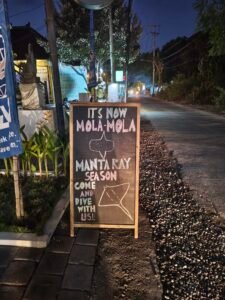
Best time for Mola Mola: July to October is the peak season when cold upwellings from the deep bring Mola Mola up to cleaning stations around Crystal Bay. Outside this window sightings are less reliable. I got lucky.
Motion sickness: Take pills before you board. Do not wait to see how you feel. The crossing to some dive sites takes time and the swell can be significant. Scopoderm patches worn behind the ear the night before are more effective than tablets taken on the morning. Ask a pharmacist before you go.
Drift diving: If you have never done a drift dive, the instructors will brief you. You cannot really fight the current here. The skill is in reading it, staying with your buddy and knowing when to end your air. Go with an experienced divemasters who knows the sites.
Accommodation: Blue Corner Dive has on-site accomdation. Basic and functional. The advantage is you roll out of bed and into your wetsuit. Nearly every dive is done as a drift along the drop-off with encounters across moray eels, whitetip reef sharks, turtles and pelagics depending on the site and season.
What to bring: cash, motion sickness medication, reef-safe sunscreen.
Muslim Traveller Tips
Nusa Lembongan is a Hindu-majority island. Halal food is hard but requires navigation. Stick to seafood and vegetarian.
Quick Reference
- Dive operator: Blue Corner Dive, Nusa Lembongan
- Best for: Mola Mola (July to October), manta rays (year-round), drift diving, PADI courses
- Difficulty: drift dives require at least Open Water certification. Advanced Open Water recommended for deeper sites like Crystal Bay
- Motion sickness: take medication before boarding, not after you feel sick
- Accommodation: on-site bungalows at Blue Corner, basic and clean
- Getting there: fast boat from Sanur on the Bali mainland to Nusa Lembongan. I used Rocky Fast Cruise.
[…] For the full diving guide: I Got My Advanced Open Water in Nusa Lembongan and Threw Up on the Boat […]