Salam,
This is the guide I wish I had before I went to Lebanon. Use it as a quick reference, since I entered Lebanon from Syria via the Al Masnaa border crossing, which gave me a different entry point from most travellers. For the purposes of this itinerary, I have written it assuming you are arriving at Beirut’s Rafic Hariri International Airport since that is how most people will enter. If you are coming from Syria, scroll to the section at the bottom.
I covered Beirut widely including the south of the city, Byblos, Batroun, Jounieh and the Bekaa Valley during my trip in February 2026.
Before you read further, check the current travel advisory before planning. My full safety post is here: Is Lebanon Safe for Muslim Travellers in 2026?
A Quick Note on Muslim Communities in Lebanon
Lebanon is roughly 54 percent Muslim, split almost equally between Sunni and Shia communities. In particular, Sunni areas like Hamra in west Beirut feel immediately familiar for most Muslim travellers. Shia-majority areas like the southern suburbs of Beirut and parts of the Bekaa have a different character. Both communities practise the same faith and, overall, the hospitality is genuine across both. As a Sunni Muslimah, Lebanon was my first time being immersed in a mixed Muslim environment and it was one of the most meaningful parts of the trip.
Is Lebanon Muslim-Friendly?
Yes, more than most people expect. In fact, halal food is the default across most of Lebanon. As a hijabi Muslimah I moved freely everywhere with no friction.
On Christian-majority areas like Jounieh and tourist parts of Byblos, pork and alcohol are more common even in restaurants that look halal. Ask before you order. Most staff will answer directly.
5-Day Itinerary
Day 1: Arrive in Beirut, Hamra, Corniche, Zaitunay Bay
First, base yourself in Hamra. It is the most convenient area for Muslim travellers, reliable halal food, mosques within walking distance and a central location.
- Walk around Hamra in the afternoon
- Head to the Corniche before sunset, best people-watching in the city
- End the evening at Zaitunay Bay for dinner by the water
Where to pray: Hamra Mosque, quiet neighbourhood mosque, a short walk from most accommodation in the area.
Day 2: Downtown Beirut, Pigeon Rocks and Le Chef
Start downtown, then move west across the city to Raouche before finishing in Gemmayze for lunch. This flows naturally west to east.
- Mohammad Al-Amin Mosque, Martyrs Square, the large blue-domed mosque that dominates the Beirut skyline. Stands directly next to Saint George Maronite Cathedral. One frame, two faiths, one city.
- Al-Omari Grand Mosque, originally a Roman temple, then a Byzantine church, then a Crusader church, converted to a mosque in 1291 by the Mamluks. One of the oldest mosques in Lebanon.
- Green Line, former civil war boundary between Muslim West Beirut and Christian East Beirut (1975 to 1990).
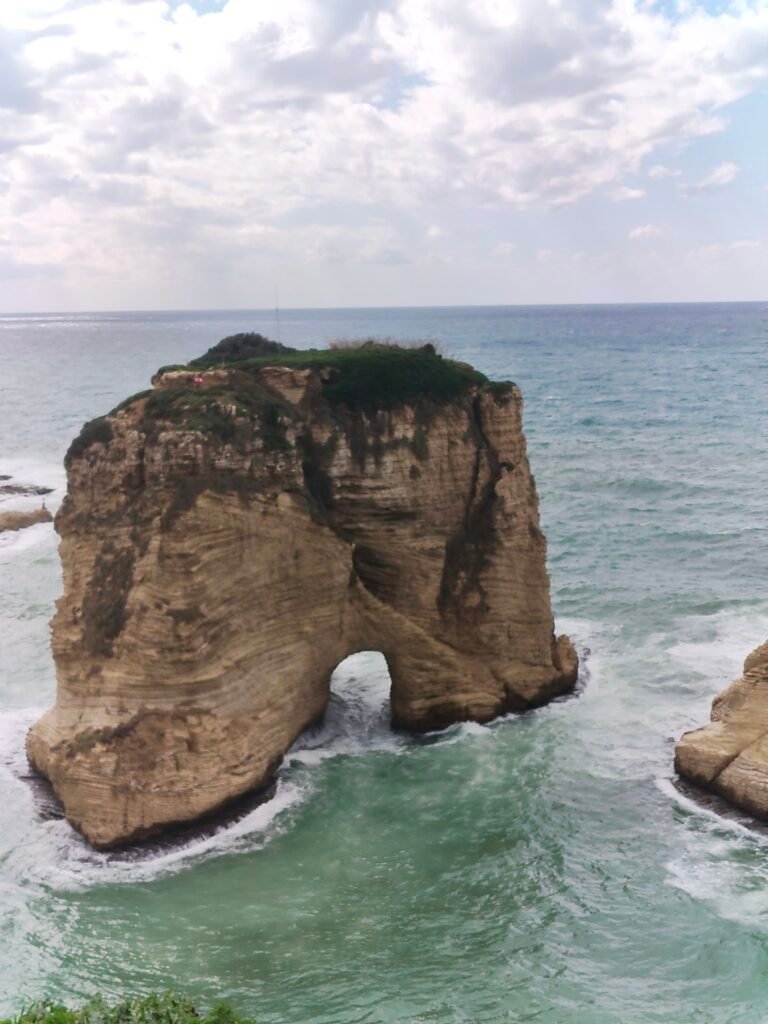
- igeon Rocks, Raouche two natural limestone sea arches on Beirut’s western tip. Go to the clifftop viewing area.
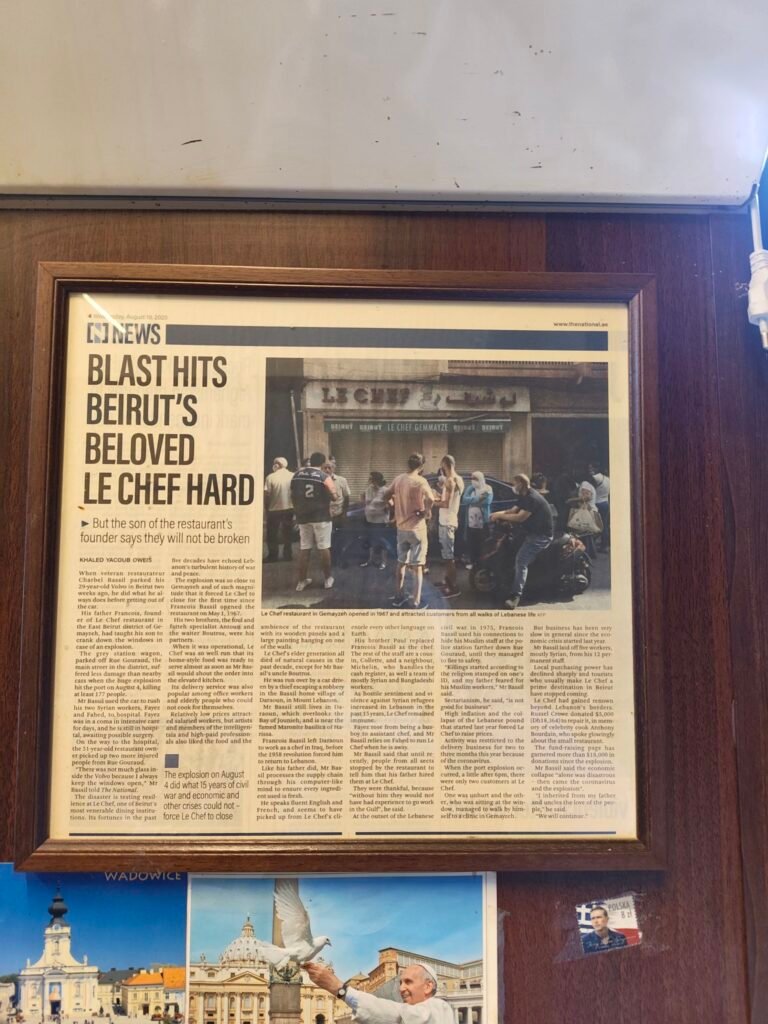
- Lunch at Le Chef, legendary no-frills Lebanese restaurant since the 1960s.
Where to pray: both Al-Omari and Mohammad Al-Amin are open to visitors throughout the day.
Day 3: Coastal Road North, Tabarja, Byblos
Hire a driver or take a shared taxi up the coastal road. Stop at Tabarja for lunch at مسمكة الحسون (Hasoun Fish Restaurant) before continuing to Byblos. The restaurant sits right on the coast road, fresh seafood, local and unpretentious. There is also a souvenir shop nearby at 34°07’15.4″N 35°38’49.0″E worth a quick stop for Lebanese crafts and soap.
In Byblos, one of the oldest continuously inhabited cities in the world:
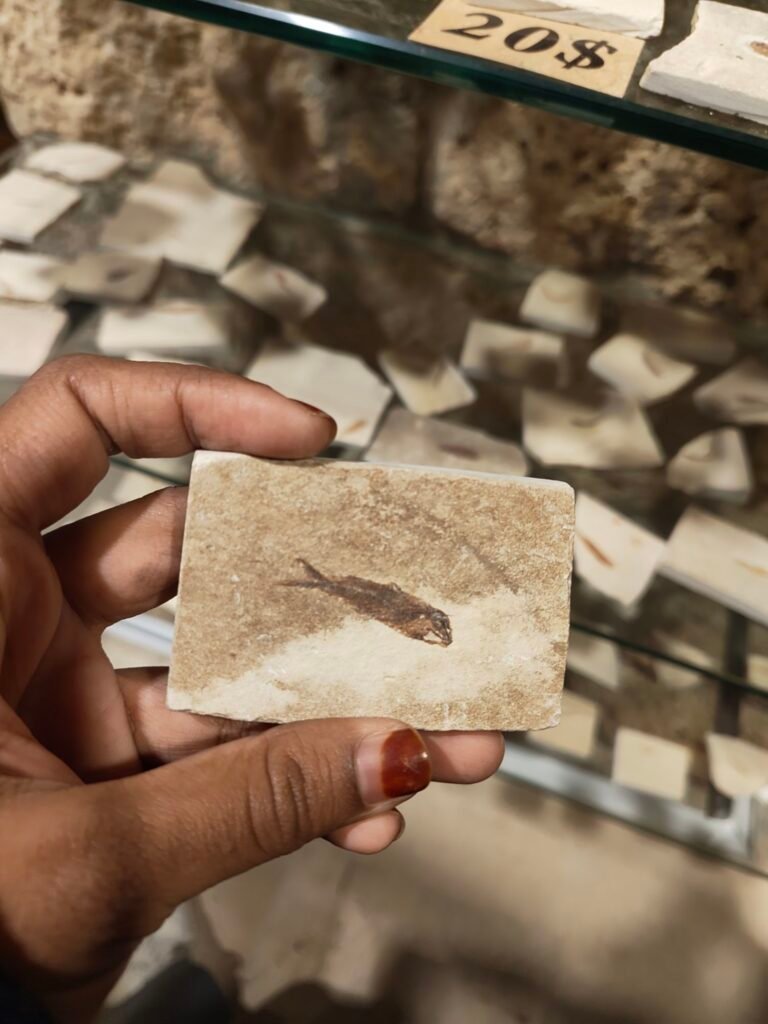
- Memory of Time Fossil Museum, do not skip this. Family-run museum with 100-million-year-old fossils found in the Lebanese mountains. Rated 4.8 on Google. It puts the whole city in context.
- Byblos Castle and old port area
- Old town stone lanes
- Harbour wall at sunset
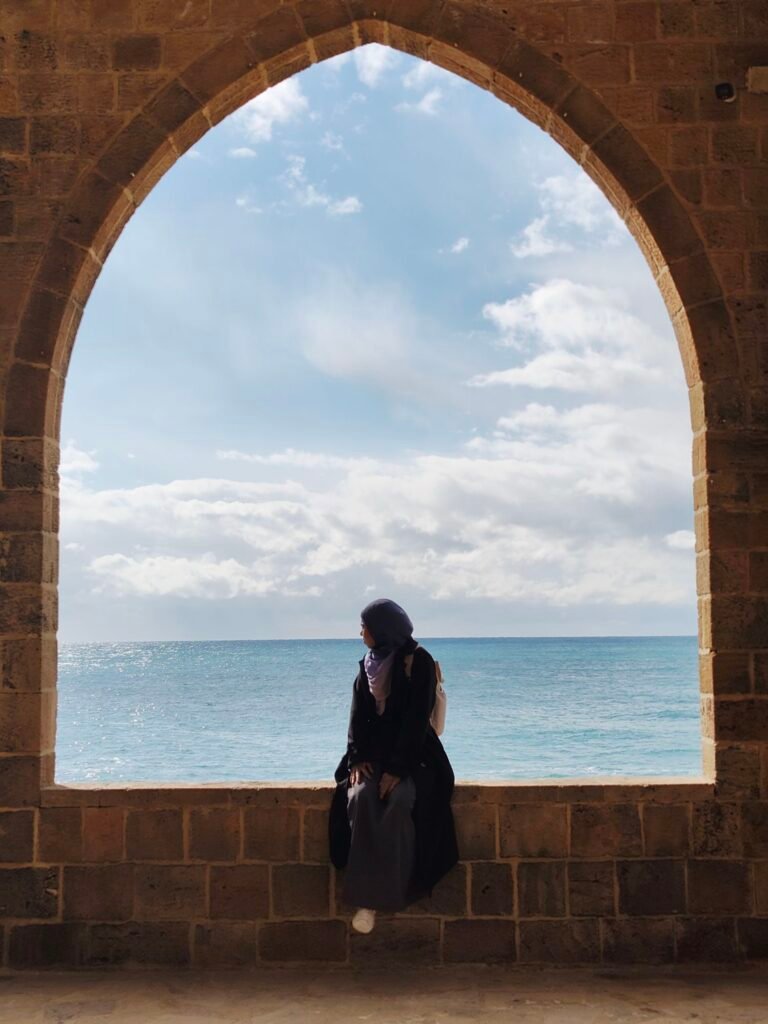
- Saint Mary Church and Church of Our Lady of the Sea, the historical layering of faiths in one small town is worth witnessing. The view of the sea here is amazing!
Halal food in Byblos: mixed population so always ask about meat sourcing before ordering.
Day 4: Batroun, Jounieh and Our Lady of Lebanon
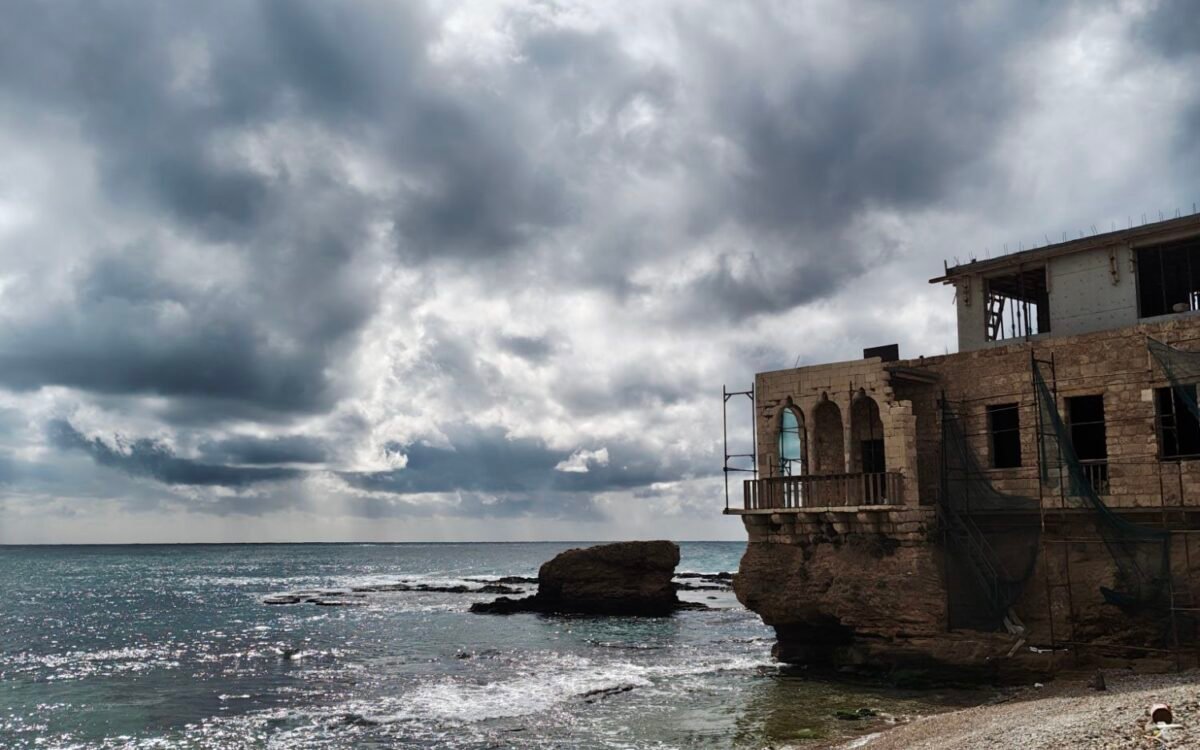
- Morning in Batroun, relaxed coastal town north of Byblos. Old Phoenician walls, small old town, a completely different pace. Bahsa Beach nearby for a quiet stretch of coast.
- Head south to Jounieh, predominantly Christian city, ask about halal before ordering anywhere.
- Our Lady of Lebanon the 15-ton bronze statue inaugurated in 1908, twenty-three years before Rio’s Christ the Redeemer. Open and welcoming to all faiths. Cover shoulders and knees. The terrace at golden hour is worth the entire trip up.
Day 5: Bekaa Valley, Baalbek and Yammoune
Hire a driver for the day. The Bekaa Valley is a completely different Lebanon from the coast, more rural, more open, and the landscape carries a weight that is hard to describe.
Note that the Baalbek-Hermel area is currently high-risk due to the ongoing conflict. Check the advisory carefully before including this day in your itinerary.
- Baalbek, one of the largest and best-preserved Roman temple complexes in the world.
- Yammoune, my driver’s home village in the Bekaa. Just enjoy the vibes.
Where to Pray in Lebanon
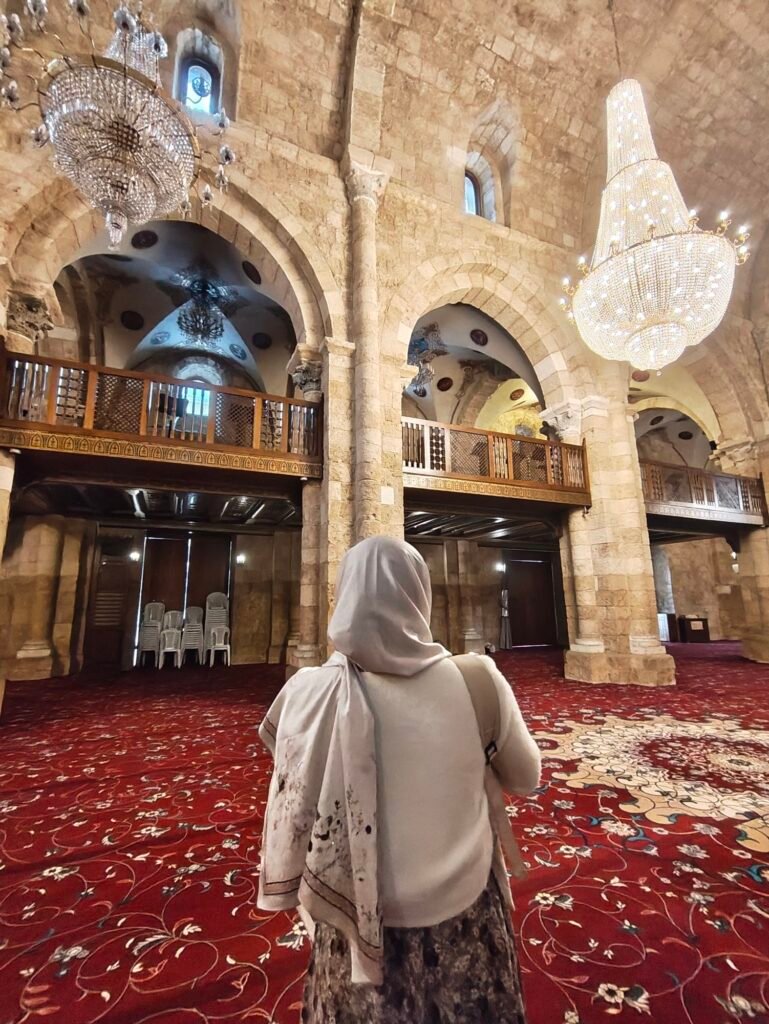
- Hamra Mosque, neighbourhood mosque, quiet and welcoming
- Mohammad Al-Amin Mosque, Martyrs Square, large capacity, Beirut landmark
- Al-Omari Grand Mosque, Downtown Beirut
In Christian-majority areas like Jounieh and Byblos, however, mosques exist but are less visible. Use Google Maps to find the nearest one.
Halal Food Guide
Places I Visited
- Le Chef honest Lebanese food at honest prices since the 1960s. Cash only.
- Tasty Bees, good everyday Lebanese food
- Hasoun Fish Restaurant
I went during ramadan, I didn’t explore much food as I would normally would but these are the must try.
Dishes to Try
- Manakish, flatbread with zaatar or cheese.
- Hummus, nothing like the supermarket version. Warm, smooth, with olive oil pooled in the centre.
- Kibbeh, ground meat mixed with bulgur wheat, fried or baked.
- Falafel, crispy and light. Eat in a wrap with pickles and garlic sauce from a street stall.
- Knafeh, shredded pastry with soft cheese, sugar syrup and pistachios. Try it warm.
- Kumis, if you are up for it. Lebanese sweets from any pastry shop are excellent.
Scenes Worth Capturing
Lebanon has places worth pausing at. Here are the ones that stayed with me.
- Pigeon Rocks, Raouche,
- Mohammad Al-Amin Mosque
- Our Lady of Lebanon, Harissa
- Byblos old port harbour
- Batroun Phoenician walls
Photography reminder: in politically sensitive neighbourhoods, near infrastructure and anywhere you see flags or political murals, ask before taking photos. People may take it the wrong way. When in doubt, put your phone away.
Places Worth Adding to Your List
These are places I did not explore but genuinely wish I had.
Nature and Scenery
- Baatara Gorge Waterfall, Tannourine, a waterfall that plunges into a limestone cave. One of Lebanon’s most visually striking natural sites. Best in spring when snowmelt is at its peak.
- Jeita Grotto, vast underground cave system north of Beirut, accessible by boat and on foot. One of the most visited natural attractions in Lebanon for good reason.
- Ehden and Horsh Ehden Nature Reserve, mountain town in northern Lebanon with hiking trails and cool air. Completely different from the coastal Lebanon most people see.
History and Heritage
- Mseilha Fort, near Batroun, a lesser-known medieval fort perched on a rocky hill with panoramic views. Since you are already in Batroun on Day 5, this is worth adding as a short extension.
- Douma Village, Batroun district, traditional red-roofed stone houses and cobblestone streets. Good for a slow morning walk.
- Anjar, Bekaa Valley, Umayyad ruins from the 8th century. The only surviving Umayyad city in Lebanon and important Islamic history that most visitors miss entirely.
For Muslim Travellers Specifically
- Tripoli, north Lebanon, Lebanon’s second largest city and its most halal-friendly. Around 95 percent Sunni Muslim, with pork essentially absent from the restaurant scene. The old souks are among the best in the region and Hallab 1881, the famous Lebanese sweets institution founded in 1881, is based here. On my list for next time.
Coming from Syria: The Bekaa Valley and Baalbek
I visited the Bekaa Valley with my driver, including Yammoune, his home village. Overall, it is a very different Lebanon from the coast, more rural, more agricultural, and the landscape carries a weight that is hard to describe.
A Note on Shia Neighbourhoods
Dahieh in south Beirut is Lebanon’s main Shia-majority neighbourhood. Very different from Hamra in feel, with flags, murals and a strong community identity. Worth understanding as part of the fuller picture of Lebanon.
It is not on this itinerary. Dahieh has been struck repeatedly since March 2026 and remains high-risk. Keep it off your route for now. When things change, it deserves a proper visit.
Coming from Syria, I also visited Baalbek. If you are entering from Syria, Baalbek sits naturally on your route through the Bekaa before heading west to Beirut. Note that the surrounding Baalbek-Hermel area is currently high-risk, so check the advisory carefully before including it in your itinerary.
If You Are Entering from Syria
Most travellers arrive at Beirut airport and start there. I came a different way, overland from Syria through the Al Masnaa border crossing in February 2026.
If you are entering from Syria, the sequence is different from the airport arrival. You clear Syrian exit at the Jdeidat Yabous checkpoint, cross the neutral zone, buy your Lebanon entry stamp on the Lebanese side before immigration, and enter through Al Masnaa. The stamp costs 1,000,000 Lebanese Pounds, roughly USD 11 to 12. Bring USD cash. Have a trusted driver who knows the crossing.
Coming from Syria puts you closest to the Bekaa Valley first, then Beirut. A logical route from the border is: Al Masnaa crossing, into the Bekaa Valley, Baalbek, then west toward Beirut. I took this route and visiting Baalbek on the way in, before the weight of Beirut takes over, is the right call.
The full border crossing story with everything you need to know is here: Crossing from Syria into Lebanon at Al Masnaa
Practical Quick Reference
- Currency: Carry USD. Accepted almost everywhere. Keep small bills.
- Transport: Service taxis for short distances, private driver for day trips. Bolt and Uber work in Beirut.
- Dress: Hijab is completely normal across Lebanon. Modest dress is appropriate everywhere.
- Halal rule: Default in Muslim-majority areas. Always ask in Christian-majority tourist areas.
- Photography: Ask first in sensitive neighbourhoods. See note above.
- Border crossing: If entering from Syria at Al Masnaa, read this first: Crossing from Syria into Lebanon
[…] from this blog:Muslim Travel Guide to Lebanon | 5 Day ItineraryIs Lebanon Safe for Muslim Travellers in 2026?Crossing from Syria into Lebanon at Al […]